Roulette Betting Systems: Do They Actually Work?
Explore popular roulette betting strategies like Martingale, Fibonacci, and D'Alembert. Learn the math behind each system and which approach suits your style.
Roulette has captivated gamblers for centuries, and with it came countless betting systems promising to beat the wheel. But do any of them actually work? Let's analyze the most popular strategies and separate myth from math.
Understanding Roulette Odds
Before diving into strategies, you need to understand the fundamental math:
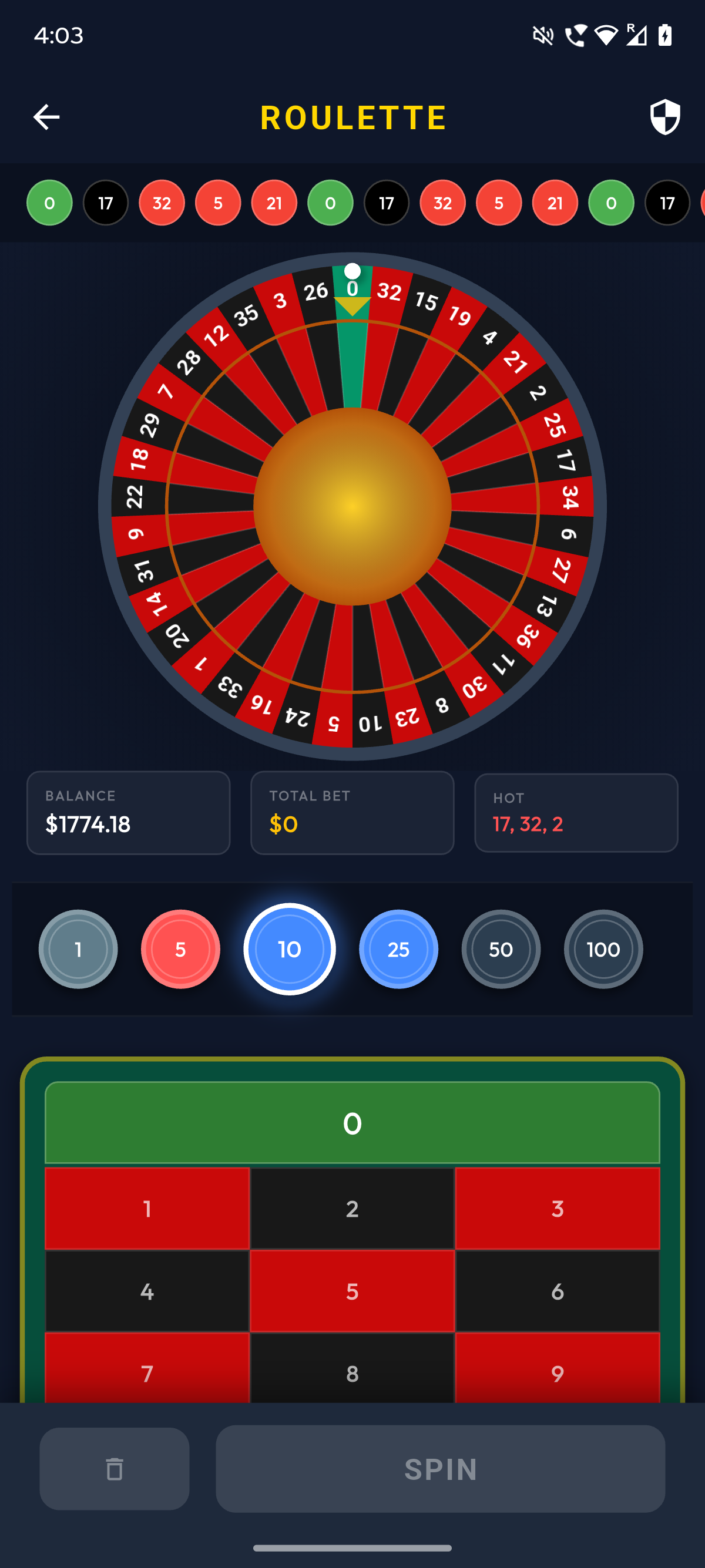
- European Roulette: 37 numbers (0-36), house edge 2.7%
- American Roulette: 38 numbers (0, 00, 1-36), house edge 5.26%
MPlay uses European Roulette, giving you better odds than most Las Vegas casinos.
Bet Types and Payouts
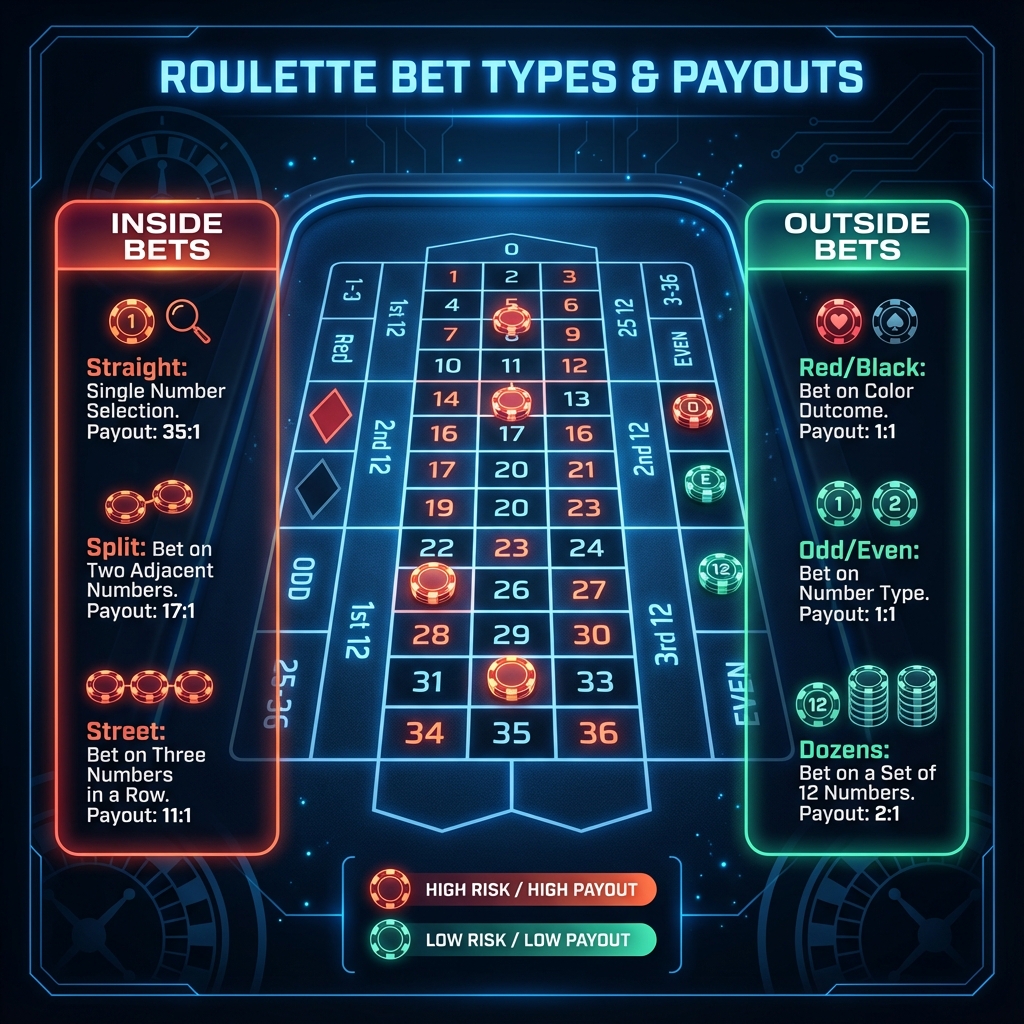
| Bet Type | Payout | Probability | House Edge |
|---|---|---|---|
| Straight (single number) | 35:1 | 2.7% | 2.7% |
| Split (2 numbers) | 17:1 | 5.4% | 2.7% |
| Street (3 numbers) | 11:1 | 8.1% | 2.7% |
| Corner (4 numbers) | 8:1 | 10.8% | 2.7% |
| Red/Black | 1:1 | 48.6% | 2.7% |
| Odd/Even | 1:1 | 48.6% | 2.7% |
| Dozens (1-12, etc.) | 2:1 | 32.4% | 2.7% |
The Martingale System
How it works: Double your bet after every loss. When you win, you recover all losses plus profit equal to your original bet.
Example:
- Bet $10 on Red → Lose (-$10)
- Bet $20 on Red → Lose (-$30 total)
- Bet $40 on Red → Win (+$40, net +$10)
Verdict: Works in the short term but guarantees eventual catastrophic loss.
The Reverse Martingale (Paroli)
How it works: Double your bet after wins instead of losses. Set a win limit (usually 3 consecutive wins) then reset.
Example sequence: $10 → Win → $20 → Win → $40 → Win → Cash out at $70 profit, reset to $10.
Verdict: Lower risk than Martingale, captures winning streaks while limiting losses.
The D'Alembert System
How it works: Increase bet by 1 unit after a loss, decrease by 1 unit after a win.
- More conservative than Martingale
- Aims for equal wins and losses (which would yield profit)
- Still affected by house edge over time
Verdict: Smoother ride than Martingale but still vulnerable to extended losing streaks.
The Fibonacci System
How it works: Follow the Fibonacci sequence (1, 1, 2, 3, 5, 8, 13...). Move forward after a loss, back two steps after a win.
This creates a more gradual progression than Martingale while still attempting loss recovery.
Verdict: Interesting mathematically but doesn't overcome house edge.
The James Bond Strategy
How it works: On each spin, bet:
- $140 on 19-36 (high numbers)
- $50 on 13-18 (six-line)
- $10 on 0 (insurance)
This covers 25 of 37 numbers but loses $200 if 1-12 hits (32.4% chance).
Verdict: Fun as a one-time play, not sustainable long-term.
The Truth About Betting Systems
Here's the uncomfortable reality:
However, betting systems aren't useless. They provide:
- Bankroll structure: Disciplined betting amounts
- Entertainment value: Makes sessions more engaging
- Short-term variance: Can produce profitable sessions
Our Recommendation: The Session Strategy
Instead of chasing "winning systems," try this practical approach:
- Set a session bankroll: An amount you're comfortable losing
- Use flat betting: Same bet size every spin (1-2% of bankroll)
- Set a win target: If you double your bankroll, cash out
- Set a loss limit: When bankroll is gone, stop
- Enjoy the game: It's entertainment, not income
Ready to spin? Play Roulette on MPlay with European rules and 2.7% house edge.

Former poker pro turned crypto gaming analyst. 10+ years experience in online gaming and blockchain technology.



Ready to play?
Join thousands of players on MPlay — the fairest crypto gaming platform.
Create Free Account